Metabolic Health Summary
Carbohydrates are not fundamentally harmful; carbohydrate *speed of digestion* is what drives metabolic dysfunction. When starches lack physical fiber matrices, pancreatic alpha-amylase and intestinal brush-border maltase hydrolyze amylose and amylopectin into glucose within minutes. By swapping high-GI refined grains for whole legumes, cooled retrograded tubers, pearl barley, and steel-cut oats, you smooth out glycemic variability, prevent hyperinsulinemia, and feed colonic microbiota through the second-meal effect.
Glycemic Index (GI) vs. Glycemic Load (GL) Comparison
| Carbohydrate Source | Serving Size | Glycemic Index (GI) | Glycemic Load (GL) | Fiber / Serving | Metabolic Classification |
|---|---|---|---|---|---|
| Baguette / White Bread | 1 slice (30 g) | 75 (High) | 15 (High) | 0.8 g | Rapid Spike |
| Jasmine White Rice | 1 cup cooked (158 g) | 73 (High) | 30 (Extreme) | 0.6 g | Rapid Spike |
| Cooked Quinoa | 1 cup cooked (185 g) | 53 (Low) | 18 (Moderate) | 5.2 g | Sustained Release |
| Boiled Sweet Potato | 1 medium (150 g) | 46 (Low) | 11 (Moderate) | 4.0 g | Sustained Release |
| Cooked Lentils | 1 cup cooked (198 g) | 32 (Very Low) | 9 (Low) | 15.6 g | Superior Metabolic Satiety |
| Pearl Barley | 1 cup cooked (157 g) | 28 (Very Low) | 12 (Moderate) | 6.0 g | Superior Beta-Glucan |
First identified in 1982 by Dr. David Jenkins, the Second-Meal Effect describes how low-GI, fermentable carbohydrates consumed at one meal significantly blunt blood sugar spikes at a subsequent meal hours later. When legumes or barley are digested, their resistant starch reaches the colon 4 to 6 hours later. Colonic fermentation generates short-chain fatty acids (SCFAs) that enter portal circulation, inhibiting hepatic free fatty acid release and up-regulating glucagon-like peptide 1 (GLP-1). Consequently, even if your next meal contains higher-glycemic carbs, your body processes them with improved insulin sensitivity.
Smart Carbohydrate Swaps for Daily Cooking
- Swap white rice for cooked-and-cooled parboiled or brown rice: Parboiling forces vitamins and minerals into the grain endosperm before milling, while cooling increases retrograded resistant starch.
- Swap instant oat packets for steel-cut oats: Instant oats are pre-cooked and rolled flat, destroying the grain structure and raising GI to 79. Steel-cut oats retain intact oat groat fragments, keeping GI under 52 and providing prolonged morning energy.
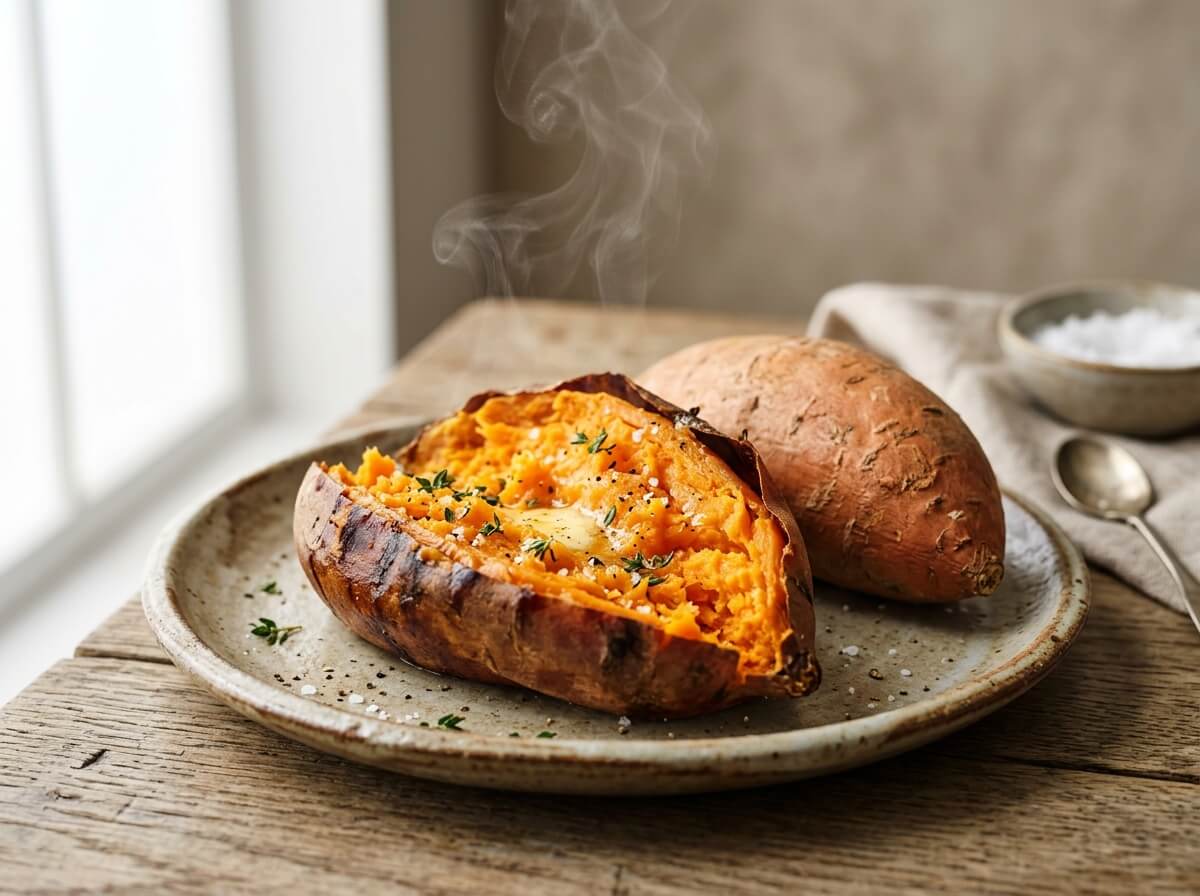
- Swap mashed russet potatoes for sweet potato or cauliflower mash: Boiled sweet potatoes have a GI of 46 compared to 85 for baked russet potatoes, delivering rich beta-carotene alongside steady glucose kinetics.