Short answer
Yes, several common foods provide more potassium per 100 g than banana (358 mg). In this comparison using USDA FoodData Central data, raw spinach (558 mg), cooked Swiss chard (549 mg), raw avocado (485 mg), baked sweet potato (475 mg) and raw guava (417 mg) all contain more potassium per 100 g than banana.
Quick Answer
Banana provides 358 mg of potassium per 100 g and is a practical, convenient potassium source. However, several other foods provide more potassium per 100 g. In this FoodAlt comparison, raw spinach provides 558 mg, cooked Swiss chard provides 549 mg, raw avocado provides 485 mg, baked sweet potato provides 475 mg and raw guava provides 417 mg (all per 100 g). The ranking can change depending on whether you compare by weight, by calorie or by serving.
What Does Potassium Do in the Body?
Potassium is an essential mineral and electrolyte. It plays important roles in several body functions:
- Nerve transmission: Potassium helps transmit electrical signals between nerve cells.
- Muscle contraction: Normal muscle function, including the heart muscle, depends on adequate potassium.
- Fluid balance: Potassium works with sodium to help maintain normal fluid balance inside and outside cells.
- Normal heart function: Potassium is involved in maintaining a regular heartbeat.
- Cellular function: Potassium is the most abundant intracellular cation and supports normal cellular processes.
According to the NIH Office of Dietary Supplements, potassium is found in many foods and is important for normal body function. Most people obtain potassium through a varied diet that includes fruits, vegetables, legumes and other whole foods.
How Much Potassium Do Adults Need?
The National Academies of Sciences, Engineering, and Medicine established Adequate Intake (AI) values for potassium. These values represent recommended daily intakes for healthy individuals:
| Group | Adequate Intake (mg/day) |
|---|---|
| Adult men (19+ years) | 3,400 mg |
| Adult women (19+ years) | 2,600 mg |
| Pregnant women | 2,900 mg |
| Breastfeeding women | 2,800 mg |
Source: NIH Office of Dietary Supplements. Individual needs may vary based on health conditions, medications and other factors.
A single banana provides meaningful potassium (a medium banana of about 118 g contains roughly 422 mg), but one banana does not meet an adult's full daily potassium needs. A varied diet that includes vegetables, fruits, legumes and other foods can provide potassium from multiple sources.
5 Foods With More Potassium Per 100 g Than Bananas
The table below compares five potassium-rich foods that provide more potassium per 100 g than banana. All values are from USDA FoodData Central (SR Legacy). Preparation state is identified for each food.
| Food | Preparation | Potassium / 100 g | Calories / 100 g | Potassium / 100 kcal | vs Banana |
|---|---|---|---|---|---|
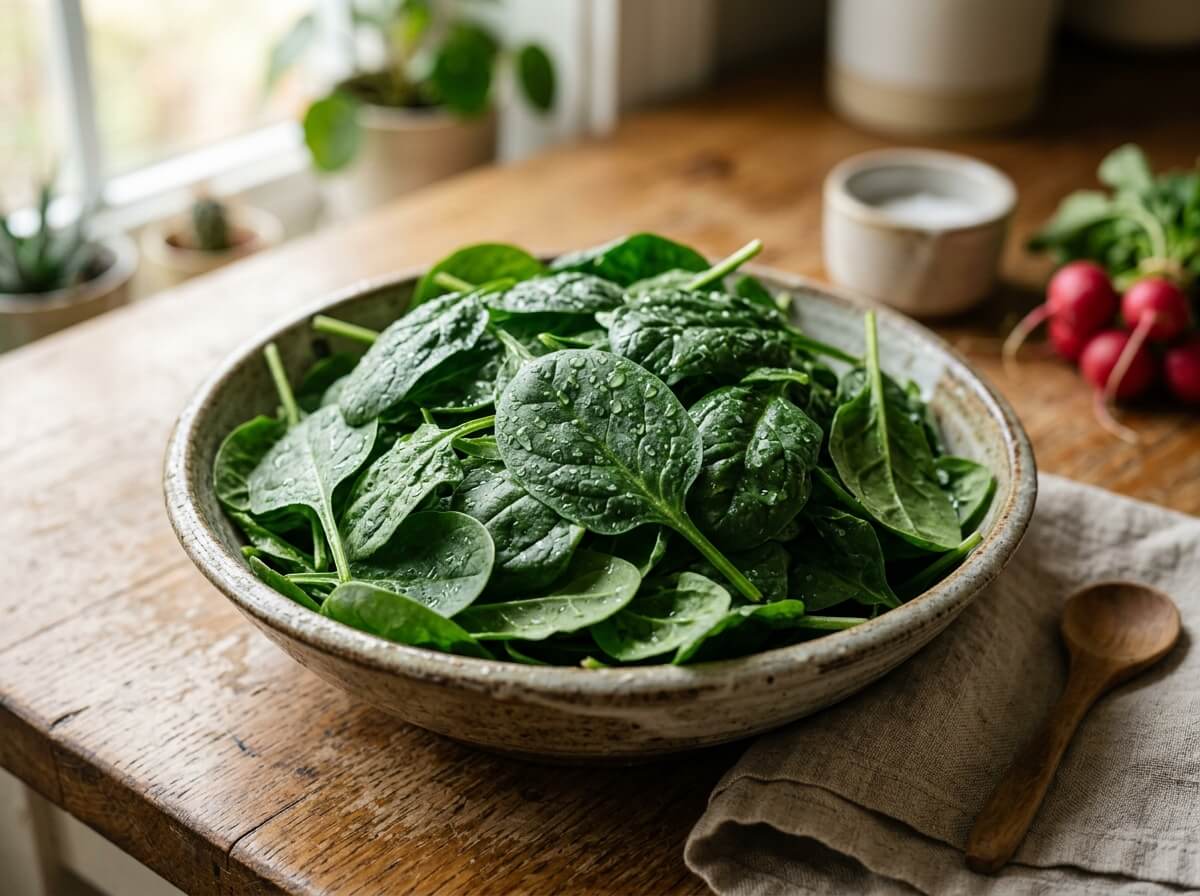
| Spinach | Raw | 558 mg | 23 kcal | 2,426 mg | +56% |
| Swiss Chard | Cooked, boiled | 549 mg | 20 kcal | 2,745 mg | +53% |
| Avocado | Raw | 485 mg | 160 kcal | 303 mg | +35% |
| Sweet Potato | Baked, flesh | 475 mg | 90 kcal | 528 mg | +33% |
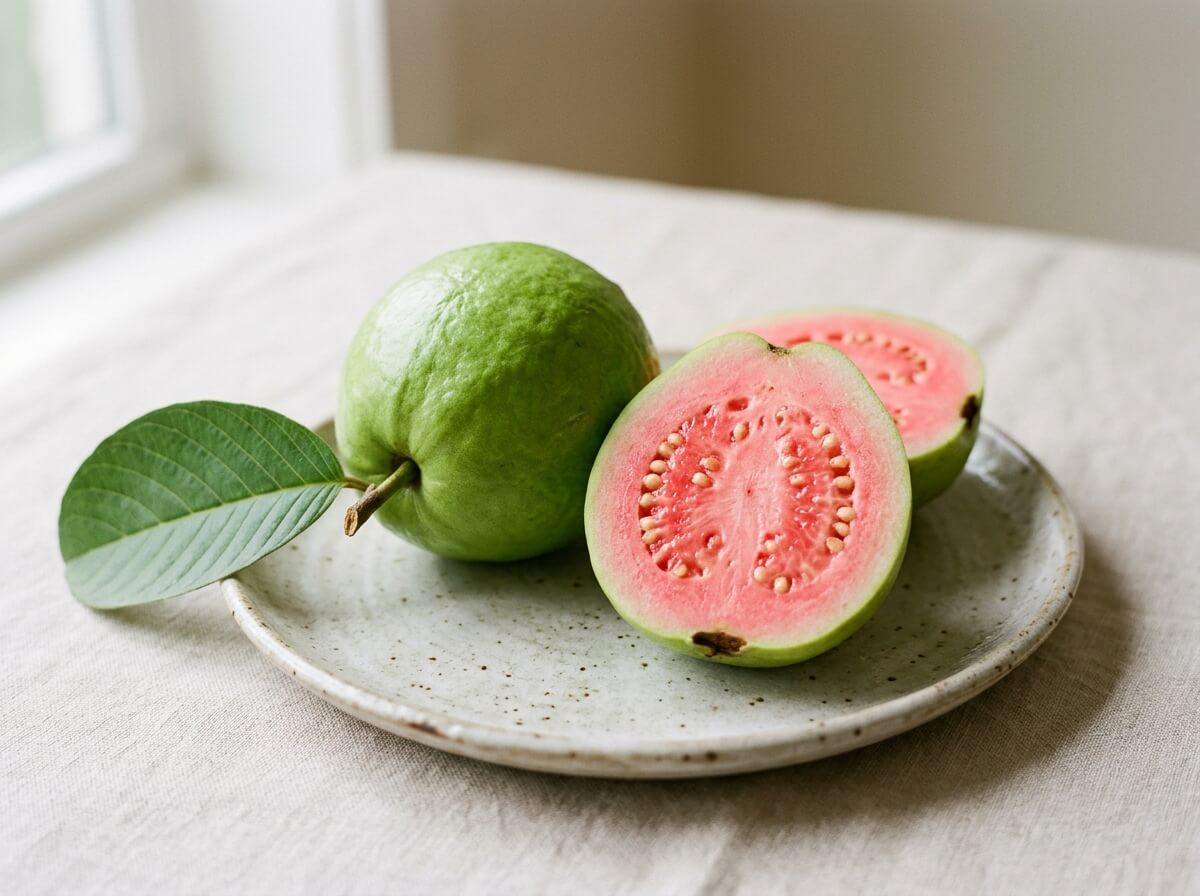
| Guava | Raw | 417 mg | 68 kcal | 613 mg | +16% |
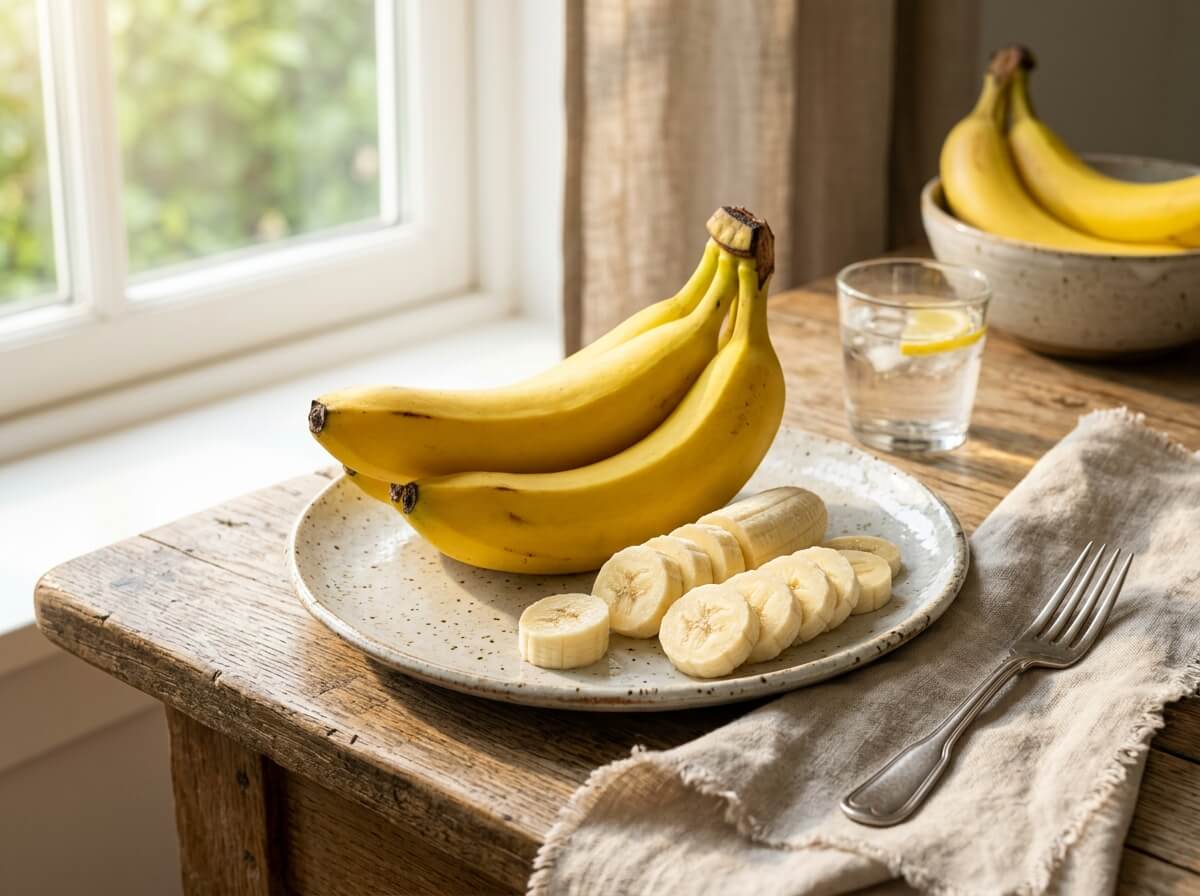
| Banana (baseline) | Raw | 358 mg | 89 kcal | 402 mg | Baseline |
All six foods are useful potassium sources. The percentage differences shown are relative to banana's 358 mg of potassium per 100 g. For example, raw spinach provides 558 mg of potassium per 100 g, which is approximately 200 mg more than banana per 100 g, or about 56% more.
Potassium Per 100 g vs Potassium Per 100 Calories
Potassium per 100 g tells you how much potassium is present in a fixed weight of food. This is useful for standardized comparison between foods.
Potassium per 100 kcal tells you how much potassium a food provides relative to its energy content. FoodAlt calculates this as: Potassium per 100 g × (100 ÷ Calories per 100 g). This measure is useful when you want to increase potassium intake without adding more calories than you need. See the FoodAlt methodology page for more detail.
The ranking changes depending on the measure:
Ranked by potassium per 100 g
- Spinach (raw): 558 mg potassium per 100 g
- Swiss chard (cooked, boiled): 549 mg potassium per 100 g
- Avocado (raw): 485 mg potassium per 100 g
- Sweet potato (baked): 475 mg potassium per 100 g
- Guava (raw): 417 mg potassium per 100 g
Ranked by potassium per 100 kcal
- Swiss chard (cooked, boiled): 2,745 mg potassium per 100 kcal
- Spinach (raw): 2,426 mg potassium per 100 kcal
- Guava (raw): 613 mg potassium per 100 kcal
- Sweet potato (baked): 528 mg potassium per 100 kcal
- Banana (raw): 402 mg potassium per 100 kcal
- Avocado (raw): 303 mg potassium per 100 kcal
Avocado ranks third for potassium per 100 g but last for potassium per 100 kcal, because avocado is calorie-dense at 160 kcal per 100 g. Swiss chard and spinach rank at the top on both measures because they are very low in calories (20 and 23 kcal per 100 g). For more on how nutrient density per calorie affects food rankings, see the FoodAlt article on this topic.
Which Potassium-Rich Food Is Best for Your Goal?
There is no single best potassium food. The better choice depends on what you need. You can compare any two foods side by side on FoodAlt or find food alternatives based on specific nutrients.
- Most potassium per calorie: Spinach and Swiss chard, both providing over 2,400 mg of potassium per 100 kcal
- Most potassium per 100 g: Spinach (raw), with 558 mg per 100 g
- Potassium + fiber: Baked sweet potato (475 mg potassium plus 3.3 g of dietary fiber per 100 g; see Dietary Fiber & Gut Health)
- Potassium + vitamin C: Guava (417 mg potassium plus 228.3 mg of vitamin C per 100 g; see Guava vs Orange)
- Potassium + healthy fats: Avocado (485 mg potassium per 100 g alongside predominantly monounsaturated fat)
- Best leafy-green option: Spinach or Swiss chard, which both rank highest for potassium per 100 g among the foods in this comparison
FoodAlt helps you find a better food for what you need. Browse the high-potassium foods rankings or explore the food database to find what works for your goal.
Bananas Are Still a Good Potassium Source
Bananas provide 358 mg of potassium per 100 g, or roughly 422 mg in a medium banana (about 118 g). Bananas are convenient, portable, widely available, easy to include in meals and snacks, and do not require preparation.
This article does not suggest that bananas are a poor food choice. Bananas are a useful potassium source. The point is that other foods can also provide substantial potassium, and a varied diet that includes vegetables, fruits and other food groups can help you meet your daily potassium needs.
Easy Potassium Food Swaps
FoodAlt is about finding useful alternatives based on your goals, not declaring one food universally better. Here are practical ways to include more potassium-rich foods in your diet:
| Instead of | Consider | Why |
|---|---|---|
| Banana alone for potassium | Add spinach or Swiss chard to a meal | Leafy greens provide more potassium per 100 g and per calorie |
| A low-potassium side dish | Baked sweet potato | 475 mg potassium per 100 g plus fiber and beta-carotene |
| A low-potassium snack | Half an avocado or a guava | Both provide substantial potassium with different nutrient profiles |
| Relying on one potassium source | Rotate across fruits, vegetables and legumes | Variety provides potassium from multiple food groups and additional nutrients |
The right alternative depends on your calorie needs, protein goals, fiber targets, taste preferences and dietary requirements. You can use the FoodAlt food alternatives tool to find higher-potassium alternatives for any food in the database.
Does Cooking Change Potassium Content?
Food preparation can affect nutrient concentration per 100 g. Cooking changes water content and food weight, which can increase or decrease the amount of a nutrient per 100 g of the cooked food compared with the raw food.
Potassium is water-soluble, so some potassium can leach into cooking water during boiling. Baking, roasting and steaming generally retain more potassium than boiling. The comparisons in this article use clearly identified preparation states (raw spinach, cooked Swiss chard, raw avocado, baked sweet potato and raw guava) so the values reflect the food as you would typically eat it.
When comparing foods, it is important to compare using the same or clearly identified preparation states. FoodAlt identifies the preparation state for each food in its methodology.
Can Too Much Potassium Be Harmful?
For most healthy people with normal kidney function, potassium from food is generally not a concern. The body regulates potassium levels through normal kidney function.
However, people with kidney disease may not be able to remove excess potassium effectively, and high blood potassium (hyperkalemia) can be dangerous. Certain medications, such as some blood pressure medications, potassium-sparing diuretics and ACE inhibitors, can also affect potassium levels.
People with kidney disease or people taking medications that affect potassium should speak with a healthcare professional about their potassium intake. This article provides general food-comparison information and is not medical advice.
Source: NIH Office of Dietary Supplements: Potassium.
How FoodAlt Compares Potassium
FoodAlt compares foods using standardized nutrient data to help you find useful alternatives. For potassium comparisons in this article:
- Nutrient values are from USDA FoodData Central (SR Legacy database)
- All values are normalized to 100 g edible portion
- Preparation state is explicitly identified for each food (raw, cooked, baked)
- Potassium per 100 g is compared directly between foods
- Potassium per 100 kcal is calculated as: Potassium per 100 g × (100 ÷ Calories per 100 g)
- Rankings depend on the comparison basis chosen (per 100 g, per 100 kcal, or per serving)
- Food variety, growing conditions and preparation method can affect actual nutrient values
For more detail on how FoodAlt normalizes and compares nutrition data, see the FoodAlt methodology page.