Short answer
Dietary fiber comprises plant-derived carbohydrates and associated polymers that resist enzymatic digestion in the human small intestine and pass into the large intestine. In the colon, specific fiber types act as substrates for microbial fermentation, generating short-chain fatty acids (SCFAs) such as acetate, propionate, and butyrate. Different whole plant foods provide varying proportions of soluble, insoluble, fermentable, and prebiotic fibers, making dietary variety a practical foundation for digestive nutrition.
Quick answer
Dietary fiber supports gut health through two primary mechanisms: physical modulation of stool consistency and gastrointestinal transit (primarily insoluble and viscous soluble fibers), and colonic fermentation that produces beneficial microbial metabolites (primarily fermentable and prebiotic fibers). Foods like chia seeds (34.4 g fiber/100 g), cooked black beans (8.7 g/100 g), cooked lentils (7.9 g/100 g), and raspberries (6.5 g/100 g) deliver distinct combinations of fiber types. You can use FoodAlt's food comparison methodology to evaluate foods by weight (per 100 g) or by energy (per 100 kcal).
What Is Dietary Fiber?
Dietary fiber refers to carbohydrate polymers and oligomers, along with associated plant substances such as lignin, that are neither hydrolyzed nor absorbed in the human small intestine. While dietary starches and simple sugars are broken down by human salivary and pancreatic enzymes into absorbable monosaccharides, humans lack the digestive enzymes required to cleave the β-glycosidic bonds found in structural plant cell walls and storage polysaccharides.
Dietary fiber is naturally abundant in whole plant foods, including:
- Legumes: Lentils, chickpeas, black beans, split peas, and kidney beans
- Whole grains: Oats, barley, brown rice, whole wheat, and pseudocereals like quinoa
- Vegetables: Broccoli, Brussels sprouts, spinach, carrots, and sweet potatoes
- Fruits: Berries, pears, apples, guava, and citrus fruits
- Nuts and seeds: Chia seeds, flaxseed, pumpkin seeds, almonds, and walnuts
Because dietary fiber encompasses cellulose, hemicellulose, pectins, gums, mucilages, β-glucans, resistant oligosaccharides (such as fructooligosaccharides and galactooligosaccharides), and resistant starch, it does not behave as a single uniform substance in the digestive tract. The physiological impact of any fiber depends on its solubility, viscosity, and susceptibility to colonic fermentation.
Why Does Fiber Matter for Gut Health?
Dietary fiber interacts with human physiology throughout the entire length of the gastrointestinal tract. Rather than acting merely as inert "roughage," dietary fiber influences gastric emptying rate, nutrient absorption kinetics, bowel transit time, mucosal barrier integrity, and microbial ecology.
Key digestive roles of dietary fiber include:
- Stool bulk and regularity: Insoluble fibers and unfermented soluble residues retain water within the fecal mass, increasing stool weight and stimulating normal peristaltic contractions.
- Viscosity and glycemic moderation: Viscous soluble fibers dissolve in water to form gel-like networks that slow the diffusion of digestive enzymes and glucose, moderating postprandial blood glucose responses.
- Colonic epithelial fuel: Fermentable fibers that reach the cecum and colon are metabolized by resident anaerobic microbes to produce short-chain fatty acids, notably butyrate, which serves as the primary energy source for colonocytes (the epithelial cells lining the large intestine).
- Bile acid interaction: Certain viscous fibers bind bile acids in the small intestine, promoting their fecal excretion and prompting the liver to draw upon circulating cholesterol for de novo bile acid synthesis.
Types of Dietary Fiber
For decades, nutritional labels and public health guidance categorized dietary fiber strictly into "soluble" and "insoluble" fractions. While this chemical classification remains useful, modern nutritional science recognizes that a fiber's physiological properties are defined by multiple intersecting characteristics:
- Solubility: Whether the fiber disperses or dissolves in water at physiological temperature and pH.
- Viscosity: Whether the dissolved fiber forms a thick, gel-like matrix that increases fluid resistance.
- Fermentability: The extent and rate at which colonic anaerobic microorganisms can metabolize the fiber into gases and short-chain fatty acids.
- Prebiotic capability: Whether the fiber is selectively utilized by host microorganisms to confer a documented health benefit.
These categories are not mutually exclusive. For example, oat β-glucan is soluble, viscous, and fermentable, whereas wheat bran cellulose is insoluble, non-viscous, and minimally fermentable. Psyllium is soluble and highly viscous, but only moderately fermentable. Recognizing these multi-dimensional properties helps explain why different fiber-rich foods produce different digestive effects.
Soluble vs Insoluble Fiber
The distinction between soluble and insoluble fiber remains the most widely referenced framework in dietary guidance. The table below summarizes the key functional differences between these two broad categories:
| Feature | Soluble Fiber | Insoluble Fiber |
|---|---|---|
| Water interaction | Dissolves or disperses in water, often forming a gel or viscous solution | Does not dissolve in water; retains structural integrity and absorbs water into its matrix |
| Viscosity | Frequently viscous (e.g., pectins, β-glucans, psyllium, mucilages) | Non-viscous; maintains fibrous physical structure |
| Fermentation tendency | Generally moderate to highly fermentable by colonic bacteria | Generally slow or poorly fermentable, though partial fermentation occurs |
| Primary digestive role | Slows gastric emptying, moderates glucose absorption, binds bile acids | Adds stool bulk, accelerates transit time, stimulates mucosal fluid secretion |
| Common whole-food sources | Oats, chia seeds, lentils, black beans, apples, pears, citrus | Whole grains, wheat bran, broccoli, almonds, seed hulls, vegetable skins |
It is important to emphasize that natural whole foods rarely contain exclusively soluble or exclusively insoluble fiber. Virtually all unrefined plant foods provide a complex mixture of both fractions. For example, an apple provides soluble pectin in its inner flesh and insoluble cellulose and hemicellulose in its peel. Similarly, lentils and black beans contain substantial amounts of both soluble gums and insoluble cell-wall polysaccharides.
Fermentable vs Non-Fermentable Fiber
While solubility describes how a fiber behaves in water, fermentability describes how it interacts with the trillions of microorganisms residing in the human colon.
When non-digestible carbohydrates reach the large intestine, specialized anaerobic bacterial taxa express carbohydrate-active enzymes (CAZymes) capable of breaking down complex glycosidic bonds. This anaerobic breakdown process is termed colonic fermentation.
- Highly fermentable fibers: Inulin, oligofructose, fructooligosaccharides (FOS), galactooligosaccharides (GOS), pectins, β-glucans, and resistant starch are rapidly or extensively metabolized by colonic microbes. This process yields short-chain fatty acids (acetate, propionate, butyrate), hydrogen, carbon dioxide, and in some individuals, methane.
- Slowly or non-fermentable fibers: Cellulose, methylcellulose, and lignin resist microbial enzymatic degradation. These fibers pass through the colon largely intact, providing persistent physical bulk that retains moisture and supports regular bowel movements.
Fermentation is not inherently "better" than non-fermentation. A well-functioning digestive system benefits from both: non-fermentable fibers ensure consistent physical bulk and mechanical stimulation throughout the distal colon, while fermentable fibers supply substrates for microbial metabolic activity and SCFA synthesis.
What Is Prebiotic Fiber?
The term "prebiotic" is often used interchangeably with dietary fiber, but scientifically, not all dietary fibers qualify as prebiotics. According to the consensus definition established by the International Scientific Association for Probiotics and Prebiotics (ISAPP), a prebiotic is:
"A substrate that is selectively utilized by host microorganisms conferring a health benefit."
To qualify as a prebiotic, a dietary substance must meet three scientific criteria:
- It must resist gastric acidity, host enzymatic hydrolysis, and gastrointestinal absorption in the upper digestive tract.
- It must be fermented by the intestinal microbiota.
- It must be selectively utilized by specific beneficial microorganisms, stimulating their growth or metabolic activity in a manner linked to demonstrable physiological benefits.
Established prebiotic fibers include inulin-type fructans (inulin, oligofructose, FOS) and galactooligosaccharides (GOS). Naturally occurring dietary sources of these compounds include onions, garlic, leeks, asparagus, Jerusalem artichokes, chicory root, bananas, and oats. While many other fibers are fermentable, they may be utilized broadly by diverse microbial groups rather than selectively.
What Is Resistant Starch?
Resistant starch (RS) refers to any starch and starch-degradation products that escape enzymatic digestion in the small intestine and reach the colon intact. Functionally, resistant starch behaves like fermentable dietary fiber.
Resistant starch is classified into four primary nutritional categories:
- RS1 (Physically inaccessible): Starch trapped within intact plant cell walls, found in coarsely ground whole grains, seeds, and legumes.
- RS2 (Native granular): Starch with a tightly packed crystalline structure that resists amylase, found in raw green bananas and uncooked potatoes.
- RS3 (Retrograded starch): Formed when cooked starchy foods (such as potatoes, rice, oats, or lentils) are cooled. During cooling, amylose molecules realign into a dense, crystalline structure that enzymes cannot readily break down.
- RS4 (Chemically modified): Starches modified through cross-linking or etherification for specific food-processing applications.
When resistant starch reaches the colon, it is fermented by specialized primary degraders such as Ruminococcus bromii and Bifidobacterium species. Research indicates that resistant starch fermentation often produces a relatively high proportion of butyrate compared to certain other soluble substrates.
How Fiber Interacts With the Gut Microbiome
The human colon houses an intricate ecological community of trillions of microorganisms, including hundreds of bacterial species. While the human genome encodes fewer than twenty carbohydrate-digesting enzymes targeted primarily at starch, lactose, and sucrose, the gut microbiome collectively encodes thousands of distinct CAZymes capable of degrading complex plant polysaccharides.
Non-digestible carbohydrates that survive host digestion and become available to the colonic microbiota are termed Microbiota-Accessible Carbohydrates (MACs). When MACs enter the cecum and colon:
- Primary degradation: Specialized bacterial taxa (such as members of the Bacteroidetes phylum, Bifidobacterium, and Ruminococcus) bind to complex plant cell walls and cleave specific polysaccharide chains into smaller oligosaccharides and monosaccharides.
- Cross-feeding: Intermediate breakdown products, such as lactate, succinate, and monomeric sugars, are shared within the microbial network. Secondary fermenters (including Faecalibacterium prausnitzii, Eubacterium rectale, and Roseburia species) utilize these intermediates to generate terminal metabolites, particularly butyrate.
- Metabolic signaling: The resulting microbial metabolites modulate colonic pH, reinforce the protective mucus layer, influence gut hormone secretion (such as GLP-1 and PYY), and interact with mucosal immune receptors.
Importantly, individual microbiome composition varies substantially between people. Two individuals consuming the exact same fiber-rich meal may produce different SCFA profiles and experience differing rates of fermentation based on their baseline microbial taxa and transit dynamics.
Fiber and Short-Chain Fatty Acids
The primary metabolic end-products of dietary fiber fermentation in the colon are short-chain fatty acids (SCFAs), predominantly acetate, propionate, and butyrate. Under typical dietary conditions, these three account for more than 90% of all colonic SCFAs, generally occurring in a molar ratio of approximately 60:20:20 (acetate:propionate:butyrate), though this ratio varies with diet and intestinal transit rate.
| SCFA | Primary Production Substrates | Primary Physiological Context |
|---|---|---|
| Acetate (C2) | Diverse soluble and fermentable fibers, pectins, inulin, β-glucans | Most abundant SCFA; absorbed into portal circulation, utilized in hepatic lipid synthesis, peripheral muscle metabolism, and central appetite regulation |
| Propionate (C3) | β-glucans, resistant starch, arabinoxylans, inulin | Cleared largely by the liver; serves as a substrate for hepatic gluconeogenesis and has been investigated for roles in satiety signaling |
| Butyrate (C4) | Resistant starch, arabinoxylans, inulin, bran polysaccharides, legume oligosaccharides | Principal energy source for colonic epithelial cells (colonocytes); supports tight-junction integrity and cellular differentiation |
Acetate
Acetate is the most abundant SCFA produced in the human colon. Unlike butyrate, which is largely consumed locally by the gut epithelium, acetate enters the portal vein in substantial amounts and reaches peripheral tissues. It is utilized by skeletal muscle, heart, and brain tissues as an oxidative fuel substrate and participates in hepatic lipid metabolism.
Propionate
Propionate is selectively extracted by the liver from the portal blood supply. In the liver, propionate can act as a substrate for gluconeogenesis. Animal and clinical research has also investigated propionate's potential role in stimulating enteroendocrine L-cells to release peptide YY (PYY) and glucagon-like peptide-1 (GLP-1), hormones involved in appetite regulation and gut motility.
Butyrate
Butyrate is widely studied in colonic physiology because it supplies approximately 70% of the total energy required by mature colonic epithelial cells (colonocytes). When colonocytes oxidize butyrate via mitochondrial β-oxidation, they consume local oxygen, helping to maintain the physiological hypoxia required for an anaerobic colonic environment.
Butyrate also acts as an endogenous histone deacetylase (HDAC) inhibitor, influencing cellular gene expression related to mucosal barrier maintenance, tight-junction proteins (such as claudins and occludins), and anti-inflammatory regulatory pathways in the mucosal immune system.
Does All Fiber Produce Butyrate?
No. Different fibers produce distinct short-chain fatty acid profiles.
Whether a specific dietary fiber generates butyrate depends on several chemical and biological factors:
- Carbohydrate structure: Certain substrates (notably resistant starch, arabinoxylans from whole grains, and inulin-type fructans) are particularly efficient promoters of butyrate synthesis via cross-feeding pathways. Other substrates, such as pectin, tend to yield higher proportions of acetate.
- Microbial community composition: Butyrate is produced primarily by specialized Firmicutes taxa (such as Faecalibacterium prausnitzii, Eubacterium rectale, and Roseburia species). If an individual's microbiome has low abundances of these taxa, butyrate yields may be diminished even in the presence of fermentable fiber.
- Colonic transit time and pH: Faster transit times and mildly acidic colonic pH (around 5.5 to 6.5) favor butyrate-producing enzymatic pathways over other metabolic fates.
- Dose and adaptation: The colonic microbiota adapts to sustained fiber intake over time, modulating fermentation rates and metabolic yields.
Why Fiber Diversity May Matter
Consuming a diverse array of whole plant foods exposes the gut microbiome to a wider variety of carbohydrate polymer lengths, branching configurations, and chemical linkages (α-1,4, α-1,6, β-1,3, β-1,4, β-1,6, and β-2,1 bonds).
Because different bacterial species possess distinct enzymatic repertoires tailored to specific glycosidic bonds, a diet that includes diverse fiber sources (whole grains, legumes, tubers, cruciferous vegetables, leafy greens, berries, pome fruits, nuts, and seeds) can provide metabolic niches for a broader spectrum of commensal microorganisms.
Observational microbiome studies suggest that dietary variety is positively associated with microbial gene richness and functional redundancy. Having multiple microbial taxa capable of performing similar metabolic functions (such as SCFA synthesis) helps maintain ecosystem stability in the presence of dietary shifts or temporary disruptions.
Is Eating 30 Different Plant Foods a Week Necessary?
In recent years, the recommendation to consume "30 different plant foods per week" has gained widespread popularity. This benchmark originated from observational findings published by the American Gut Project (McDonald et al., 2018), which analyzed stool samples from thousands of citizen-science participants.
The researchers observed that participants who reported consuming more than 30 unique plant foods per week exhibited greater fecal microbial diversity and distinct microbial metabolite profiles compared with those who consumed fewer than 10 plant types weekly.
However, it is essential to understand the context of this finding:
- Observational evidence: The study observed correlations; it was not a randomized controlled trial demonstrating that reaching exactly 30 plant foods causes specific health improvements.
- Practical heuristic, not a medical mandate: "30 plants per week" is a helpful dietary concept for encouraging variety (counting whole grains, legumes, vegetables, fruits, nuts, seeds, herbs, and spices), but it is not a clinical requirement.
- Individual tolerance: Some individuals, particularly those managing digestive conditions such as Irritable Bowel Syndrome (IBS) or Small Intestinal Bacterial Overgrowth (SIBO), may need to focus on tolerated foods rather than maximizing variety all at once.
Rather than treating 30 as a rigid target, the scientific takeaway is simply that incorporating diverse whole plant foods into your weekly routine provides a wider mix of fiber structures, resistant starches, and polyphenols.
How Much Fiber Do You Need?
Dietary fiber recommendations are established by national and international public health authorities based on evidence linking adequate fiber intake with cardiovascular, digestive, and metabolic outcomes.
The National Academies of Sciences, Engineering, and Medicine (NASEM) established Adequate Intake (AI) reference values for total dietary fiber:
| Population Group | Adequate Intake (AI) | Energy-Normalized Standard |
|---|---|---|
| Adult women (19–50 years) | 25 g / day | 14 g per 1,000 kcal |
| Adult men (19–50 years) | 38 g / day | 14 g per 1,000 kcal |
| Women (51+ years) | 21 g / day | 14 g per 1,000 kcal |
| Men (51+ years) | 30 g / day | 14 g per 1,000 kcal |
| European Food Safety Authority (EFSA) | 25 g / day | For normal bowel function in adults |
According to dietary surveys from the USDA Agricultural Research Service (NHANES), the majority of adults in the United States and other industrialized nations consume significantly less fiber than recommended, with average adult intakes hovering around 15 to 17 grams per day. While increasing fiber intake is a common dietary goal, doing so gradually while maintaining adequate fluid intake is recommended to support digestive comfort.
Foods That Provide Dietary Fiber
Dietary fiber is distributed across several major plant food groups. Each category contributes different fiber types, textures, and accompanying micronutrients:
1. Legumes (Beans, Lentils & Peas)
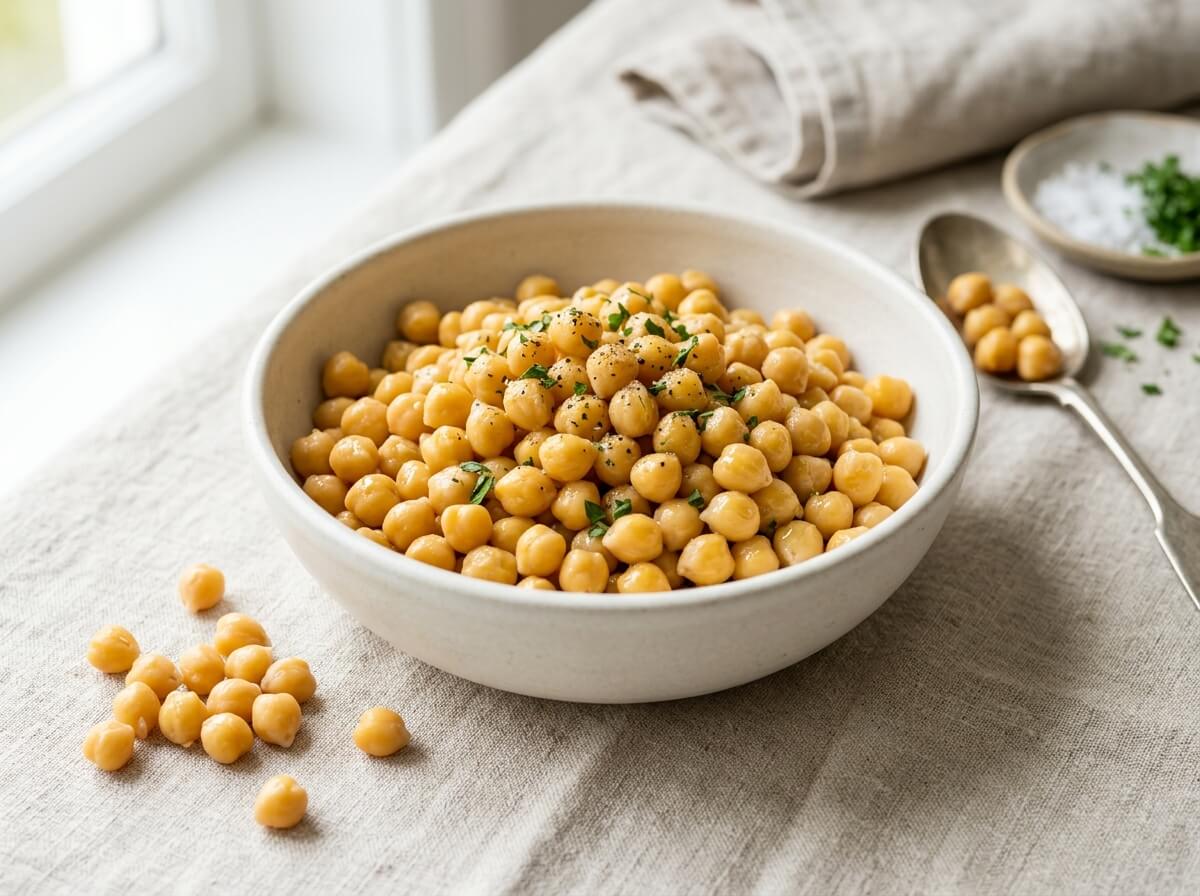
Legumes are among the richest whole-food sources of total dietary fiber. Cooked black beans provide 8.7 g of fiber per 100 g, cooked lentils supply 7.9 g per 100 g, and cooked chickpeas provide 7.6 g per 100 g. Legumes deliver soluble pectins, resistant oligosaccharides, and resistant starches alongside plant protein, folate, and non-heme iron. For more on legume protein density, see our guide on High-Protein Plant Foods.
2. Whole Grains & Seeds
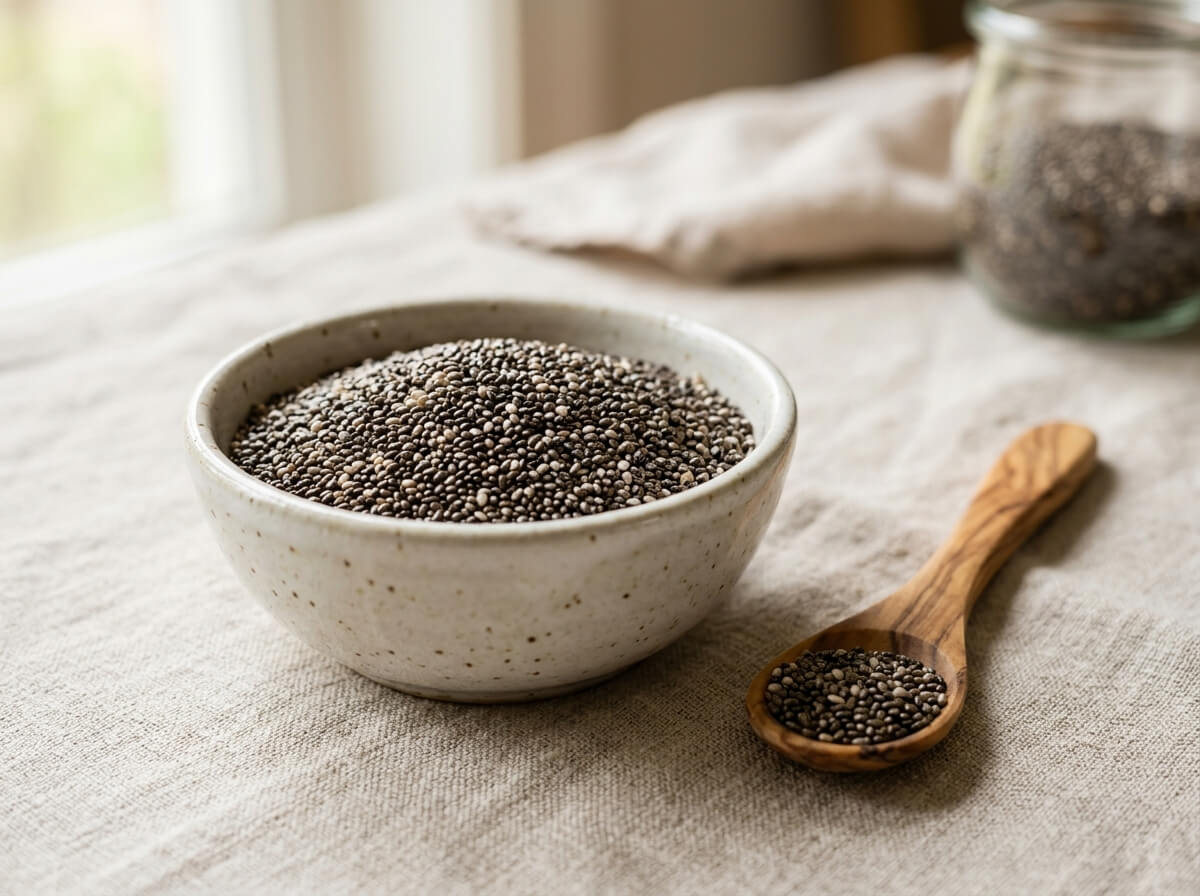
Chia seeds are exceptionally fiber-dense, containing 34.4 g of fiber per 100 g (largely insoluble cell wall polysaccharides and soluble mucilage). Rolled oats provide 10.6 g of fiber per 100 g (dry weight), including β-glucan, a viscous soluble fiber extensively studied for cholesterol binding. Cooked quinoa provides 2.8 g of fiber per 100 g, and cooked brown rice contributes 1.6 g per 100 g.
3. Vegetables & Crucifers
Cruciferous vegetables such as broccoli (2.6 g fiber/100 g) and dark leafy greens like spinach (2.2 g fiber/100 g) deliver cellulose, hemicellulose, and sulforaphane precursors. Root vegetables like baked sweet potato (3.3 g fiber/100 g) provide both soluble and insoluble fractions alongside carotenoids and potassium (see our Potassium-Rich Foods guide).
4. Fruits & Berries
Berries are among the highest-fiber fruits: raspberries provide 6.5 g and blackberries supply 5.3 g of fiber per 100 g. Tropical fruits like guava provide 5.4 g per 100 g (see Guava vs Orange), while pome fruits like pears (3.1 g/100 g) and apples (2.4 g/100 g) deliver soluble pectin and peel-bound insoluble fiber.
Verified FoodAlt Fiber Data Comparison
The table below presents verified nutritional values from the FoodAlt database, sourced from USDA FoodData Central. Preparation state is explicitly labeled for every food, as water content changes nutrient density.
| Food | Preparation State | Calories / 100 g | Fiber / 100 g | Fiber / 100 kcal |
|---|---|---|---|---|
| Chia Seeds | Raw | 486 kcal | 34.4 g | 7.1 g |
| Almonds | Raw | 579 kcal | 12.5 g | 2.2 g |
| Sesame Seeds | Raw | 573 kcal | 11.8 g | 2.1 g |
| Rolled Oats | Raw (dry) | 389 kcal | 10.6 g | 2.7 g |
| Black Beans | Cooked / Boiled | 132 kcal | 8.7 g | 6.6 g |
| Lentils | Cooked / Boiled | 116 kcal | 7.9 g | 6.8 g |
| Chickpeas | Cooked / Boiled | 164 kcal | 7.6 g | 4.6 g |
| Avocado | Raw | 160 kcal | 6.7 g | 4.2 g |
| Medjool Dates | Raw / Dried | 277 kcal | 6.7 g | 2.4 g |
| Raspberries | Raw | 52 kcal | 6.5 g | 12.5 g |
| Pumpkin Seeds (Pepitas) | Raw | 559 kcal | 6.0 g | 1.1 g |
| Guava | Raw | 68 kcal | 5.4 g | 7.9 g |
| Blackberries | Raw | 43 kcal | 5.3 g | 12.3 g |
| Sweet Potato | Baked / Cooked | 90 kcal | 3.3 g | 3.7 g |
| Pear | Raw | 57 kcal | 3.1 g | 5.4 g |
| Quinoa | Cooked | 120 kcal | 2.8 g | 2.3 g |
| Broccoli | Raw | 34 kcal | 2.6 g | 7.6 g |
| Apple | Raw (with skin) | 52 kcal | 2.4 g | 4.6 g |
| Spinach | Raw | 23 kcal | 2.2 g | 9.6 g |
Explore complete rankings in FoodAlt's curated High-Fiber Foods directory or inspect the full Dietary Fiber nutrient profile.
Fiber Per 100 g vs Fiber Per 100 Calories
Comparing foods strictly by weight (per 100 g) answers one specific question: how much fiber is present in a fixed mass of food? However, foods differ dramatically in water and fat content, which alters their energy density.
To evaluate how efficiently a food delivers dietary fiber relative to its caloric contribution, FoodAlt calculates fiber per 100 kcal using the standard formula documented in the FoodAlt methodology:
Fiber per 100 kcal = Fiber per 100 g × (100 ÷ Calories per 100 g)
| Comparison Mode | What It Measures | Analytical Use Case |
|---|---|---|
| Per 100 g | Fiber concentration by food mass | Standardized baseline for food chemistry comparisons |
| Per serving | Fiber in a typical consumption portion | Practical meal planning and dietary tracking |
| Per 100 kcal | Fiber delivered relative to energy content | Calorie-normalized comparisons across differing water/fat levels |
| Per 300 kcal | Equal-energy comparison at meal scale | Analytical side-by-side food comparisons on FoodAlt |
Worked Example:
- Raw almonds contain 12.5 g of fiber per 100 g. However, because almonds are rich in healthy fats (579 kcal/100 g), 100 kcal of almonds is approximately 17.3 grams of food, delivering 2.2 g of fiber per 100 kcal.
- Raw raspberries contain 6.5 g of fiber per 100 g. Because raspberries are water-rich and low in calories (52 kcal/100 g), 100 kcal of raspberries is approximately 192 grams of fruit, delivering 12.5 g of fiber per 100 kcal.
- Cooked lentils provide 7.9 g of fiber per 100 g at 116 kcal/100 g, providing 6.8 g of fiber per 100 kcal while simultaneously delivering 7.8 g of plant protein per 100 kcal.
Neither comparison mode is superior; they serve different purposes. Calorie normalization is particularly helpful for individuals balancing specific fiber goals within a target energy budget. For a detailed breakdown of how energy normalization works across all nutrients, see our deep-dive on Nutrient Density Per Calorie.
Why Preparation State Matters
Food composition values change substantially depending on whether a food is raw, boiled, roasted, baked, or dried. The primary driver of these changes is moisture content:
- Boiling grains and legumes: Dry lentils or beans absorb more than their dry weight in water during boiling. While dry lentils contain roughly 15–20 g of fiber per 100 g, cooked lentils contain 7.9 g per 100 g because the added water increases total weight.
- Drying fruits: Dehydrating fresh plums into prunes or fresh grapes into raisins removes water, concentrating fiber and calories per 100 g of finished product.
- Starch retrogradation: Boiling and subsequently cooling starchy foods increases the proportion of type-3 resistant starch (RS3), altering the fermentable fiber profile compared to the freshly cooked warm food.
FoodAlt explicitly tracks and displays the preparation state of every food record to prevent misleading comparisons between raw ingredients and cooked meals.
Does Cooking Change Fiber Content?
Cooking does not destroy dietary fiber in the way heat degrades heat-sensitive vitamins like vitamin C or folate. Structural polysaccharides (such as cellulose and hemicellulose) have high thermal stability under standard culinary temperatures.
However, cooking can alter fiber in several subtle ways:
- Solubility shifts: Prolonged heating can break down insoluble protopectin into soluble pectin, softening the texture of cooked fruits and vegetables.
- Cell wall softening: Cooking weakens plant cell walls, making intracellular nutrients more accessible for digestion while retaining total fiber mass.
- Resistant starch formation: Cooking gelatinizes native starches (making them easier to digest initially), but subsequent cooling allows amylose chains to re-crystallize into retrograded resistant starch.
Can Too Much Fiber Cause Digestive Discomfort?
While adequate fiber intake supports gastrointestinal health, increasing fiber intake too rapidly can cause temporary digestive symptoms, including abdominal bloating, excessive gas (flatulence), cramping, or changes in stool frequency.
These symptoms occur because:
- Rapid gas generation: When large amounts of fermentable substrates suddenly enter the colon, resident bacteria rapidly produce hydrogen, carbon dioxide, and methane before microbial populations adapt.
- Osmotic water shifts: Unabsorbed fermentable oligosaccharides (FODMAPs) draw water into the small intestine through osmotic pressure, potentially causing loose stools or distension.
- Inadequate hydration: High intakes of insoluble or bulking fibers without sufficient fluid can result in dense, hard stools that are difficult to pass.
Dietary guidance universally recommends increasing fiber intake gradually over several weeks while ensuring adequate daily hydration. This allows the colonic microbiota time to expand its enzymatic capacity and adapt to higher substrate volumes.
Is More Fiber Always Better?
No. More fiber is not automatically better for every person in every context.
Nutrition is inherently individualized. While population averages show that many adults benefit from increasing dietary fiber toward recommended AI levels, excessive fiber intake or rapid fiber loading can pose challenges for certain groups:
- Individuals with gastrointestinal conditions: People experiencing active flares of Inflammatory Bowel Disease (Crohn's disease or ulcerative colitis), severe intestinal strictures, or acute diverticulitis may require temporary low-fiber or low-residue diets under medical supervision.
- Irritable Bowel Syndrome (IBS): Individuals sensitive to specific fermentable carbohydrates (FODMAPs) often benefit from tailoring fiber types (for instance, emphasizing soluble non-fermentable or slowly fermentable fibers like psyllium while moderating rapidly fermentable fructans).
- Mineral absorption considerations: Extremely high intakes of unrefined bran containing high levels of phytic acid (phytate) can bind minerals like iron, zinc, and calcium, slightly reducing their intestinal bioavailability, though varied whole-food diets generally mitigate this effect.
Individuals with specific medical conditions should consult a registered dietitian or gastroenterologist for personalized dietary guidance.
Fiber Quantity Is Only Part of the Picture
Evaluating dietary fiber solely by total grams on a nutrition label provides an incomplete picture of nutritional value. Two meals providing the exact same 10 grams of dietary fiber can behave entirely differently depending on their food matrices:
- Fiber polymer diversity: 10 grams of fiber from an isolated synthetic supplement (such as polydextrose) provides a uniform chemical structure, whereas 10 grams of fiber from a bowl of lentils and mixed berries provides a matrix of soluble pectins, insoluble cellulose, resistant starch, and arabinogalactans.
- Co-occurring micronutrients: Whole-food fiber sources deliver essential vitamins, minerals, and antioxidants. For example, chia seeds provide calcium and magnesium alongside fiber, while spinach contributes vitamin K and folate.
- Polyphenol interactions: In whole plant foods, dietary fibers are physically and chemically bound to polyphenols (such as flavonoids and ellagitannins). These bound polyphenols travel alongside fiber into the colon, where microbial enzymes release them for local antioxidant and prebiotic activity.
How FoodAlt Helps Compare Fiber-Rich Foods
FoodAlt is designed to help you look beyond generic marketing labels by exploring verified food composition data. Rather than declaring a single "superfood," FoodAlt enables you to:
- Compare any two foods side by side: Examine fiber content alongside calories, protein, carbohydrates, and micronutrients across weight and energy bases.
- Explore practical food alternatives: Find higher-fiber or lower-calorie swaps tailored to your specific dietary goals.
- Browse curated rankings: View verified whole-food fiber leaders normalized to 100 g and 100 kcal.
- Inspect nutrient profiles: Discover which foods contribute most significantly to daily reference intakes.
FoodAlt's Fiber Data and Methodology
All food comparisons on FoodAlt adhere to transparent data governance principles:
- Authoritative data sources: Food composition records are sourced primarily from USDA FoodData Central (Foundation Foods, SR Legacy, and Survey databases).
- Standardized normalization: Nutritional values are normalized per 100 g edible portion, per typical serving, per 100 kcal, and per 300 kcal.
- Handling missing data: FoodAlt strictly distinguishes between verified zero (nutrient analyzed and confirmed absent) and not available (nutrient unmeasured in source record). Missing values are never defaulted to zero.
- Preparation state transparency: All records explicitly declare preparation states (raw, cooked, boiled, baked, dried) to ensure accurate comparisons.
For complete details on our data architecture, mathematical formulas, and governance principles, visit the FoodAlt Methodology & Data Principles page.