Side-by-Side Comparison

Chicken Breast (Roasted/Cooked) vs Whole Milk (3.25% Fat)

Factual nutritional comparison based on verified food composition records.
Compare other foods
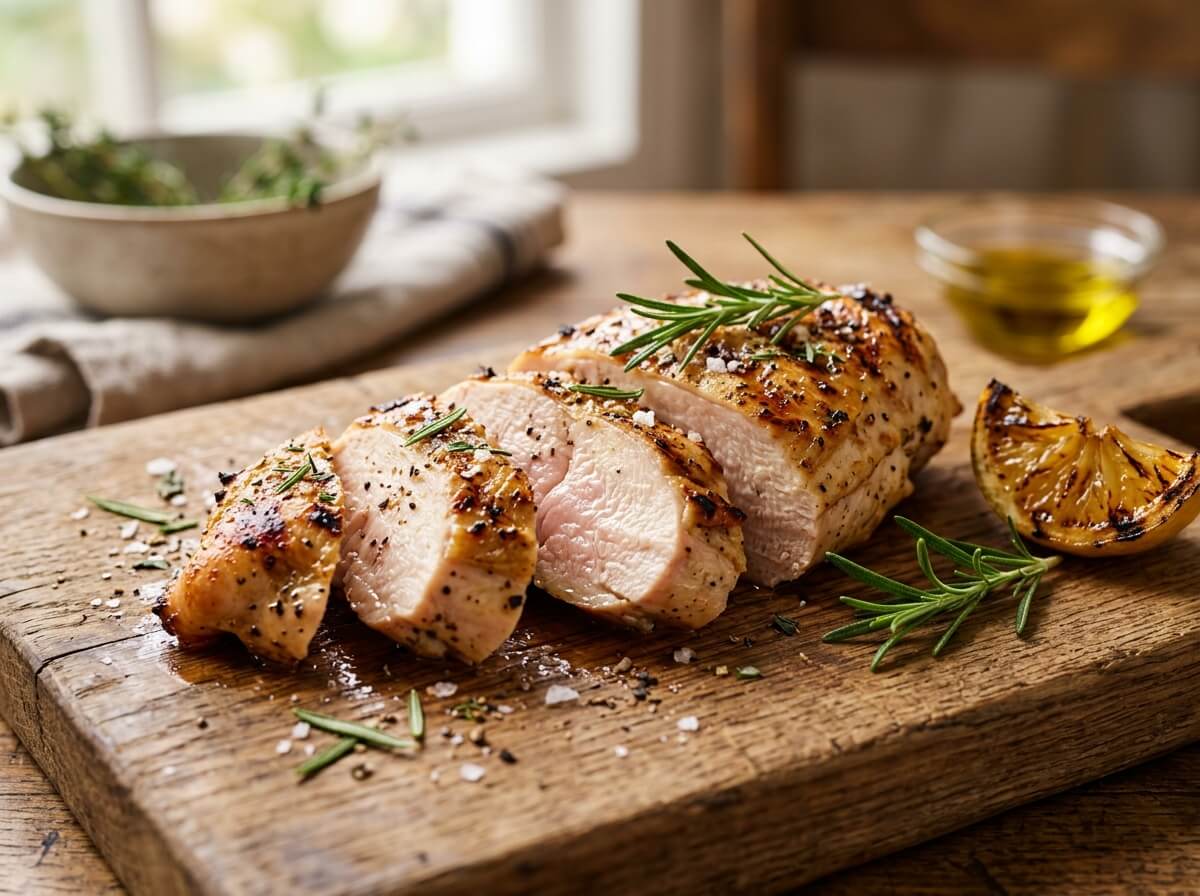
Cleanly roasted sliced chicken breast fillet showing juicy lean interior
meat poultry

Chicken Breast (Roasted/Cooked)

165Calories
31.0Protein
0.0Fiber
0.0Vit C
View Details
VS
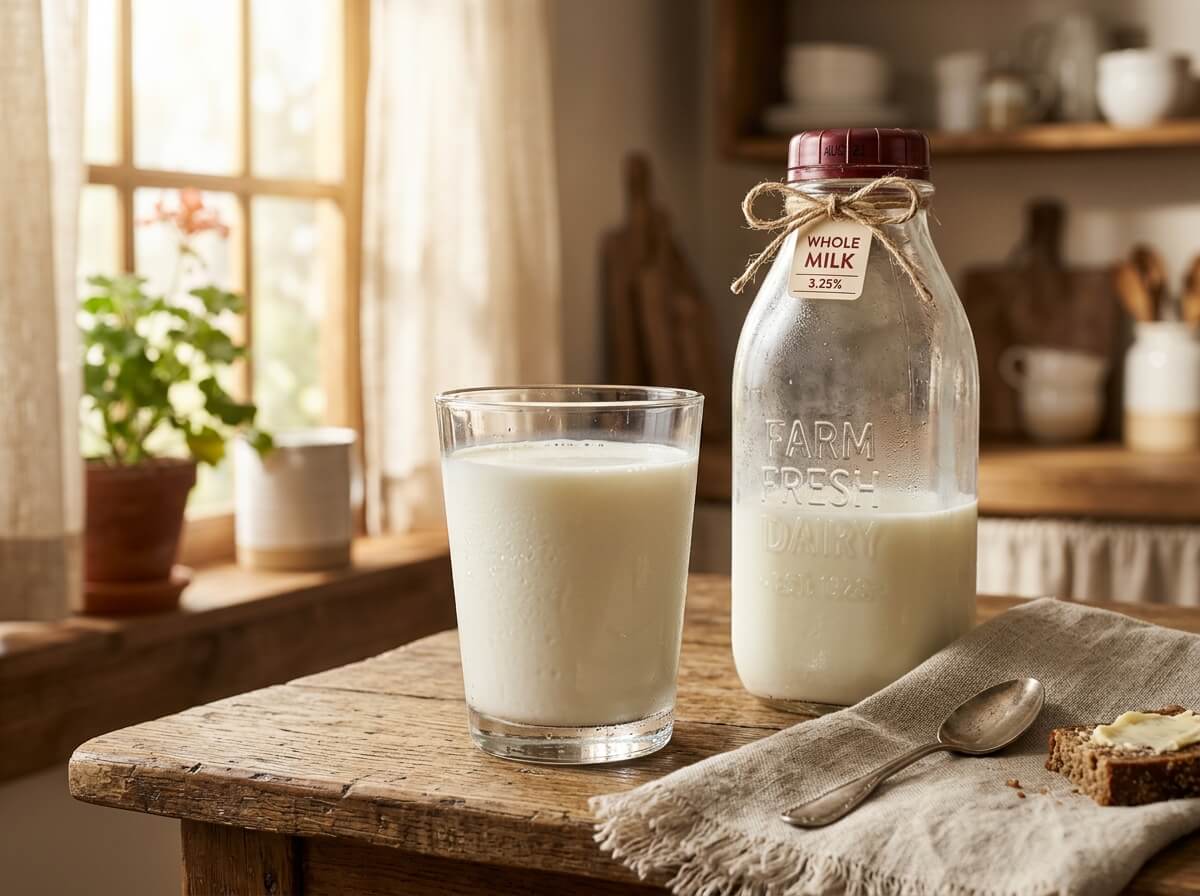
Clean fresh glass of pure white milk on neutral studio surface
dairy

Whole Milk (3.25% Fat)

61Calories
3.1Protein
0.0Fiber
0.0Vit C
View Details
Preparation State Notice

Comparing Chicken Breast (Roasted/Cooked) (cooked) with Whole Milk (3.25% Fat) (raw). Moisture variations and cooking state affect nutrient concentrations.

Highlights

Nutritional Takeaways

Based on standard 100g edible portion comparison

Lower Calories
-63%
Whole Milk (3.25% Fat)

Whole Milk (3.25% Fat) has fewer calories (energy) (61 kcal vs 165 kcal, 104 kcal less).

Higher Protein
+885%
Chicken Breast (Roasted/Cooked)

Chicken Breast (Roasted/Cooked) provides 31.0 g vs 3.2 g in Whole Milk (3.25% Fat) (+27.9 g, +885%).

Higher Potassium
+94%
Chicken Breast (Roasted/Cooked)

Chicken Breast (Roasted/Cooked) provides 256 mg vs 132 mg in Whole Milk (3.25% Fat) (+124 mg, +94%).

Lower Sugar
-100%
Chicken Breast (Roasted/Cooked)

Chicken Breast (Roasted/Cooked) has fewer total sugars (0 g vs 5.1 g, 5.1 g less).

Comparing per 100 g standard edible portion.

Nutrient
Chicken Breast (Roasted/Cooked)100 g edible portion
Whole Milk (3.25% Fat)100 g edible portion
Macronutrients6 nutrients
Calories (Energy)Chicken Breast (Roasted/Cooked) higher
Chicken Breast (Roasted/Cooked)
165 kcal8% DV
Whole Milk (3.25% Fat)
61 kcal3% DV

Chicken Breast (Roasted/Cooked) provides 165 kcal vs 61 kcal in Whole Milk (3.25% Fat) (+104 kcal, +170%).

ProteinChicken Breast (Roasted/Cooked) higher
Chicken Breast (Roasted/Cooked)
31.0 g62% DV
Whole Milk (3.25% Fat)
3.2 g6% DV

Chicken Breast (Roasted/Cooked) provides 31.0 g vs 3.2 g in Whole Milk (3.25% Fat) (+27.9 g, +885%).

CarbohydratesWhole Milk (3.25% Fat) higher
Chicken Breast (Roasted/Cooked)
0 g
Whole Milk (3.25% Fat)
4.8 g2% DV

Whole Milk (3.25% Fat) has higher carbohydrates (4.8 g vs 0 g).

Dietary FiberSimilar
Chicken Breast (Roasted/Cooked)
0 g
Whole Milk (3.25% Fat)
0 g

Both Chicken Breast (Roasted/Cooked) and Whole Milk (3.25% Fat) provide similar amounts of dietary fiber (0 g).

Total FatChicken Breast (Roasted/Cooked) higher
Chicken Breast (Roasted/Cooked)
3.6 g5% DV
Whole Milk (3.25% Fat)
3.3 g4% DV

Chicken Breast (Roasted/Cooked) provides 3.6 g vs 3.3 g in Whole Milk (3.25% Fat) (+0.32 g, +10%).

Total SugarsWhole Milk (3.25% Fat) higher
Chicken Breast (Roasted/Cooked)
0 g
Whole Milk (3.25% Fat)
5.1 g10% DV

Whole Milk (3.25% Fat) has higher total sugars (5.1 g vs 0 g).

Vitamins12 nutrients
Vitamin CSimilar
Chicken Breast (Roasted/Cooked)
0 mg
Whole Milk (3.25% Fat)
0 mg

Both Chicken Breast (Roasted/Cooked) and Whole Milk (3.25% Fat) provide similar amounts of vitamin c (0 mg).

Vitamin A (RAE)Whole Milk (3.25% Fat) higher
Chicken Breast (Roasted/Cooked)
6.0 µg1% DV
Whole Milk (3.25% Fat)
46 µg5% DV

Whole Milk (3.25% Fat) provides 46 µg vs 6.0 µg in Chicken Breast (Roasted/Cooked) (+40 µg, +667%).

Vitamin DWhole Milk (3.25% Fat) higher
Chicken Breast (Roasted/Cooked)
0 µg
Whole Milk (3.25% Fat)
1.3 µg7% DV

Whole Milk (3.25% Fat) has higher vitamin d (1.3 µg vs 0 µg).

Vitamin EChicken Breast (Roasted/Cooked) higher
Chicken Breast (Roasted/Cooked)
0.27 mg2% DV
Whole Milk (3.25% Fat)
0.07 mg

Chicken Breast (Roasted/Cooked) provides 0.27 mg vs 0.07 mg in Whole Milk (3.25% Fat) (+0.20 mg, +286%).

Vitamin KSimilar
Chicken Breast (Roasted/Cooked)
0.3 µg
Whole Milk (3.25% Fat)
0.3 µg

Both Chicken Breast (Roasted/Cooked) and Whole Milk (3.25% Fat) provide similar amounts of vitamin k (0.3 µg).

Folate (DFE)Whole Milk (3.25% Fat) higher
Chicken Breast (Roasted/Cooked)
4.0 µg1% DV
Whole Milk (3.25% Fat)
5.0 µg1% DV

Whole Milk (3.25% Fat) provides 5.0 µg vs 4.0 µg in Chicken Breast (Roasted/Cooked) (+1.0 µg, +25%).

Thiamin (Vitamin B1)Similar
Chicken Breast (Roasted/Cooked)
0.07 mg6% DV
Whole Milk (3.25% Fat)
0.05 mg4% DV

Both Chicken Breast (Roasted/Cooked) and Whole Milk (3.25% Fat) provide similar amounts of thiamin (vitamin b1) (0.07 mg).

Riboflavin (Vitamin B2)Whole Milk (3.25% Fat) higher
Chicken Breast (Roasted/Cooked)
0.12 mg9% DV
Whole Milk (3.25% Fat)
0.17 mg13% DV

Whole Milk (3.25% Fat) provides slightly more riboflavin (vitamin b2) (0.17 mg vs 0.12 mg).

Niacin (Vitamin B3)Chicken Breast (Roasted/Cooked) higher
Chicken Breast (Roasted/Cooked)
13.7 mg86% DV
Whole Milk (3.25% Fat)
0.09 mg1% DV

Chicken Breast (Roasted/Cooked) provides 13.7 mg vs 0.09 mg in Whole Milk (3.25% Fat) (+13.6 mg, +15304%).

Pantothenic Acid (B5)Chicken Breast (Roasted/Cooked) higher
Chicken Breast (Roasted/Cooked)
0.96 mg19% DV
Whole Milk (3.25% Fat)
0.37 mg7% DV

Chicken Breast (Roasted/Cooked) provides 0.96 mg vs 0.37 mg in Whole Milk (3.25% Fat) (+0.59 mg, +157%).

Vitamin B6Chicken Breast (Roasted/Cooked) higher
Chicken Breast (Roasted/Cooked)
0.60 mg35% DV
Whole Milk (3.25% Fat)
0.04 mg2% DV

Chicken Breast (Roasted/Cooked) provides 0.60 mg vs 0.04 mg in Whole Milk (3.25% Fat) (+0.56 mg, +1567%).

Vitamin B12Whole Milk (3.25% Fat) higher
Chicken Breast (Roasted/Cooked)
0.3 µg14% DV
Whole Milk (3.25% Fat)
0.5 µg19% DV

Whole Milk (3.25% Fat) provides 0.5 µg vs 0.3 µg in Chicken Breast (Roasted/Cooked) (+0.1 µg, +32%).

Minerals7 nutrients
SodiumChicken Breast (Roasted/Cooked) higher
Chicken Breast (Roasted/Cooked)
74.0 mg3% DV
Whole Milk (3.25% Fat)
43.0 mg2% DV

Chicken Breast (Roasted/Cooked) provides 74.0 mg vs 43.0 mg in Whole Milk (3.25% Fat) (+31.0 mg, +72%).

PotassiumChicken Breast (Roasted/Cooked) higher
Chicken Breast (Roasted/Cooked)
256 mg5% DV
Whole Milk (3.25% Fat)
132 mg3% DV

Chicken Breast (Roasted/Cooked) provides 256 mg vs 132 mg in Whole Milk (3.25% Fat) (+124 mg, +94%).

CalciumWhole Milk (3.25% Fat) higher
Chicken Breast (Roasted/Cooked)
15.0 mg1% DV
Whole Milk (3.25% Fat)
113 mg9% DV

Whole Milk (3.25% Fat) provides 113 mg vs 15.0 mg in Chicken Breast (Roasted/Cooked) (+98.0 mg, +653%).

IronChicken Breast (Roasted/Cooked) higher
Chicken Breast (Roasted/Cooked)
1.0 mg6% DV
Whole Milk (3.25% Fat)
0.03 mg

Chicken Breast (Roasted/Cooked) provides 1.0 mg vs 0.03 mg in Whole Milk (3.25% Fat) (+1.0 mg, +3367%).

MagnesiumChicken Breast (Roasted/Cooked) higher
Chicken Breast (Roasted/Cooked)
29.0 mg7% DV
Whole Milk (3.25% Fat)
10.0 mg2% DV

Chicken Breast (Roasted/Cooked) provides 29.0 mg vs 10.0 mg in Whole Milk (3.25% Fat) (+19.0 mg, +190%).

PhosphorusChicken Breast (Roasted/Cooked) higher
Chicken Breast (Roasted/Cooked)
228 mg18% DV
Whole Milk (3.25% Fat)
84.0 mg7% DV

Chicken Breast (Roasted/Cooked) provides 228 mg vs 84.0 mg in Whole Milk (3.25% Fat) (+144 mg, +171%).

ZincChicken Breast (Roasted/Cooked) higher
Chicken Breast (Roasted/Cooked)
1.0 mg9% DV
Whole Milk (3.25% Fat)
0.37 mg3% DV

Chicken Breast (Roasted/Cooked) provides 1.0 mg vs 0.37 mg in Whole Milk (3.25% Fat) (+0.63 mg, +170%).

Lipids1 nutrients
Saturated FatWhole Milk (3.25% Fat) higher
Chicken Breast (Roasted/Cooked)
1.0 g5% DV
Whole Milk (3.25% Fat)
1.9 g9% DV

Whole Milk (3.25% Fat) provides 1.9 g vs 1.0 g in Chicken Breast (Roasted/Cooked) (+0.85 g, +84%).

Comparison Summary

Based on 26 nutrients analyzed, Chicken Breast (Roasted/Cooked) leads in 13 categories while Whole Milk (3.25% Fat) leads in 9.Both foods show similar concentrations in 4 nutrients. Overall, Chicken Breast (Roasted/Cooked) has the nutritional edge in this comparison.

0 Foods
Compare (0/2)