Nährwerte im Vergleich

Aprikosen vs Himbeeren

Wählen Sie zwei Lebensmittel und vergleichen Sie Makronährstoffe, Vitamine und Mineralstoffe Seite an Seite: pro 100g, pro Portion oder kalorienormalisiert.
Beliebte Vergleiche
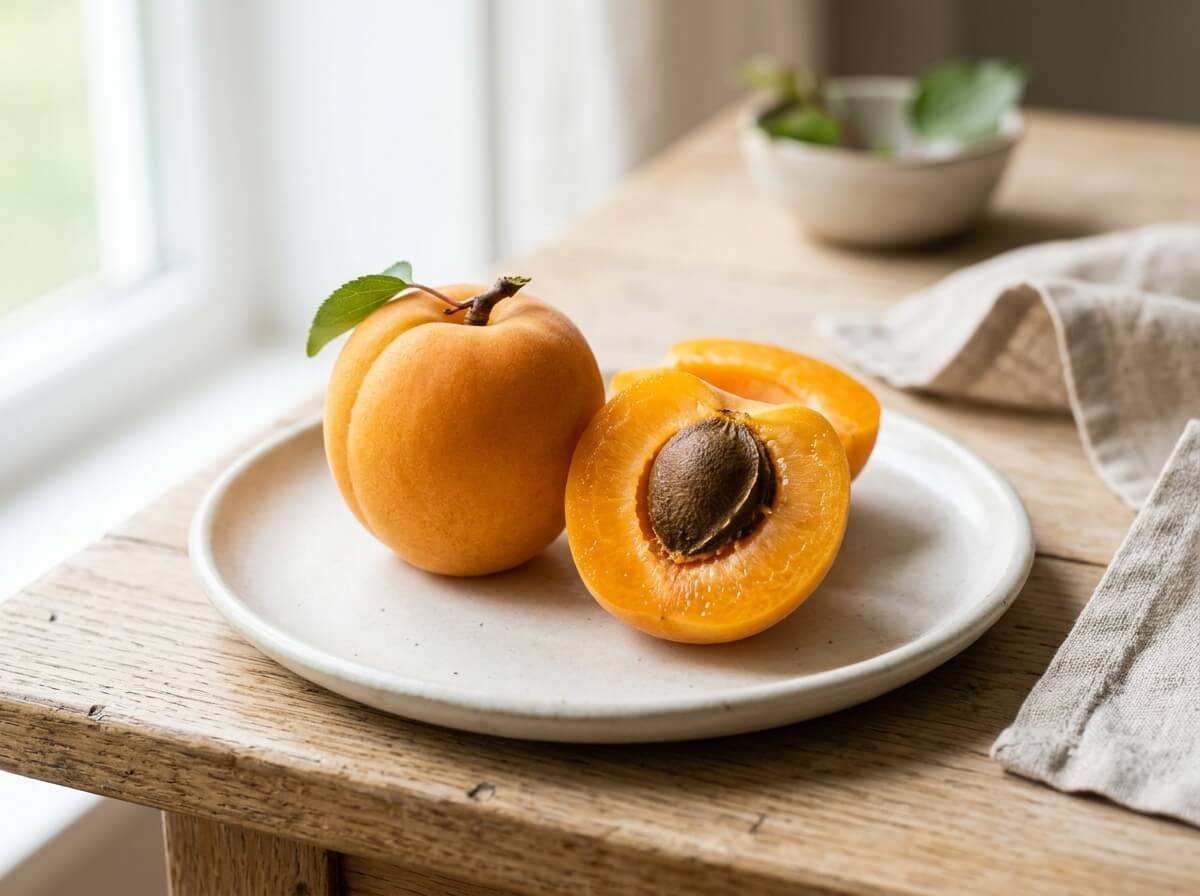
Sun-kissed golden orange apricots whole and halved on clean ceramic surface
Obst

Aprikosen

48Kalorien
1.4Protein
2.0Ballaststoffe
10.0Vitamin C
Details anzeigen
VS
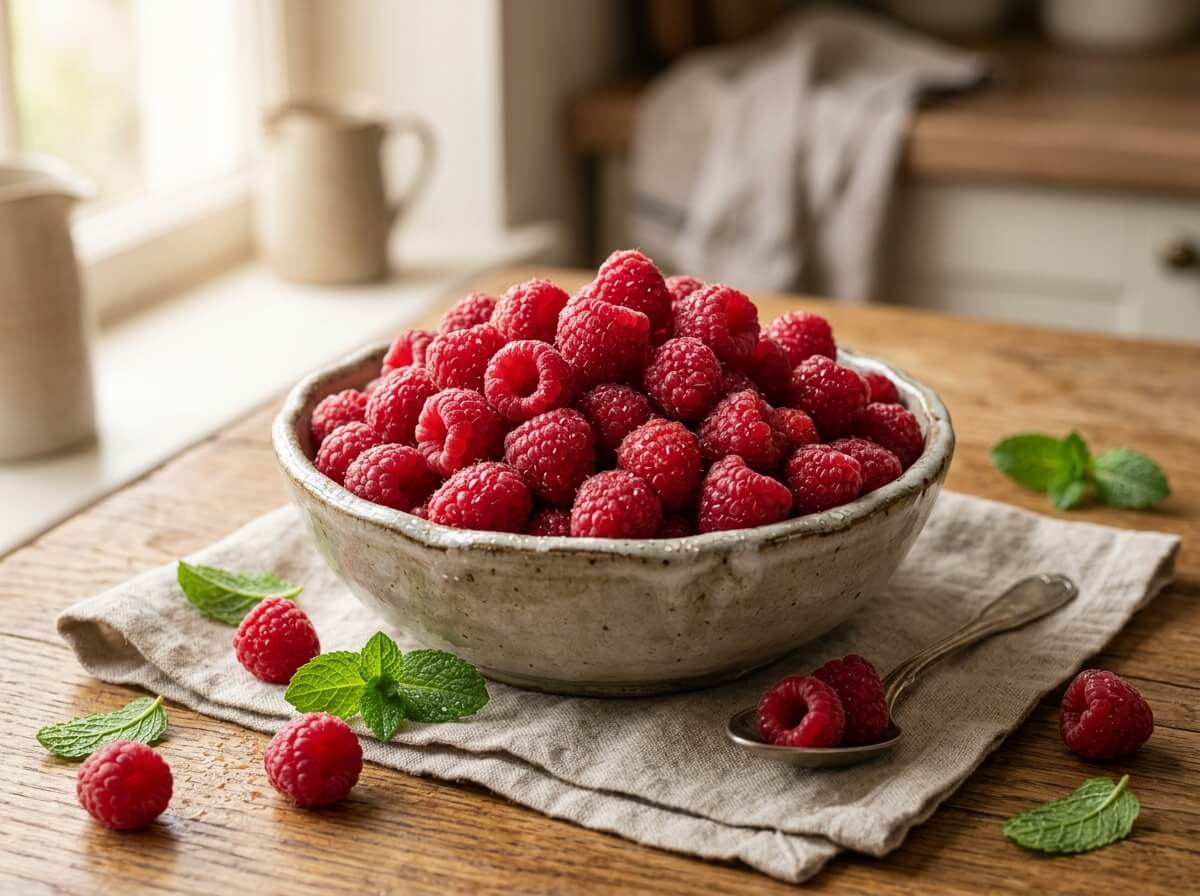
Fresh vibrant red raspberries clustered closely in a minimalist bowl
Obst

Himbeeren

52Kalorien
1.2Protein
6.5Ballaststoffe
26.2Vitamin C
Details anzeigen
Highlights

Nutritional Takeaways

Based on standard 100g edible portion comparison

Weniger Kalorien
-8%
Aprikosen

Apricots has fewer calories (energy) (48 kcal vs 52 kcal, 4 kcal less).

Mehr Protein
+17%
Aprikosen

Apricots provides 1.4 g vs 1.2 g in Raspberries (+0.20 g, +17%).

Mehr Ballaststoffe
+225%
Himbeeren

Raspberries provides 6.5 g vs 2.0 g in Apricots (+4.5 g, +225%).

Mehr Vitamin C
+162%
Himbeeren

Raspberries provides 26.2 mg vs 10.0 mg in Apricots (+16.2 mg, +162%).

Comparing per 100 g standard edible portion.

Nährstoff
Aprikosen100 g edible portion
Himbeeren100 g edible portion
Makronährstoffe6 Nährstoffe
Kalorien (Energie)Himbeeren höher
Aprikosen
48 kcal2% TB
Himbeeren
52 kcal3% TB

Raspberries provides 52 kcal vs 48 kcal in Apricots (+4 kcal, +8%).

ProteinAprikosen höher
Aprikosen
1.4 g3% TB
Himbeeren
1.2 g2% TB

Apricots provides 1.4 g vs 1.2 g in Raspberries (+0.20 g, +17%).

KohlenhydrateHimbeeren höher
Aprikosen
11.1 g4% TB
Himbeeren
11.9 g4% TB

Raspberries provides 11.9 g vs 11.1 g in Apricots (+0.82 g, +7%).

BallaststoffeHimbeeren höher
Aprikosen
2.0 g7% TB
Himbeeren
6.5 g23% TB

Raspberries provides 6.5 g vs 2.0 g in Apricots (+4.5 g, +225%).

GesamtfettHimbeeren höher
Aprikosen
0.39 g1% TB
Himbeeren
0.65 g1% TB

Raspberries provides 0.65 g vs 0.39 g in Apricots (+0.26 g, +67%).

ZuckerAprikosen höher
Aprikosen
9.2 g18% TB
Himbeeren
4.4 g9% TB

Apricots provides 9.2 g vs 4.4 g in Raspberries (+4.8 g, +109%).

Vitamine12 Nährstoffe
Vitamin CHimbeeren höher
Aprikosen
10.0 mg11% TB
Himbeeren
26.2 mg29% TB

Raspberries provides 26.2 mg vs 10.0 mg in Apricots (+16.2 mg, +162%).

Vitamin AAprikosen höher
Aprikosen
96 µg11% TB
Himbeeren
2.0 µg

Apricots provides 96 µg vs 2.0 µg in Raspberries (+94 µg, +4700%).

Vitamin DÄhnlich
Aprikosen
0 µg
Himbeeren
0 µg

Both Apricots and Raspberries provide similar amounts of vitamin d (0 µg).

Vitamin EÄhnlich
Aprikosen
0.89 mg6% TB
Himbeeren
0.87 mg6% TB

Both Apricots and Raspberries provide similar amounts of vitamin e (0.89 mg).

Vitamin KHimbeeren höher
Aprikosen
3.3 µg3% TB
Himbeeren
7.8 µg7% TB

Raspberries provides 7.8 µg vs 3.3 µg in Apricots (+4.5 µg, +136%).

FolsäureHimbeeren höher
Aprikosen
9.0 µg2% TB
Himbeeren
21 µg5% TB

Raspberries provides 21 µg vs 9.0 µg in Apricots (+12 µg, +133%).

Vitamin B1 (Thiamin)Ähnlich
Aprikosen
0.03 mg3% TB
Himbeeren
0.03 mg3% TB

Both Apricots and Raspberries provide similar amounts of thiamin (vitamin b1) (0.03 mg).

Vitamin B2 (Riboflavin)Ähnlich
Aprikosen
0.04 mg3% TB
Himbeeren
0.04 mg3% TB

Both Apricots and Raspberries provide similar amounts of riboflavin (vitamin b2) (0.04 mg).

Vitamin B3 (Niacin)Ähnlich
Aprikosen
0.60 mg4% TB
Himbeeren
0.60 mg4% TB

Both Apricots and Raspberries provide similar amounts of niacin (vitamin b3) (0.60 mg).

Vitamin B5Ähnlich
Aprikosen
0.24 mg5% TB
Himbeeren
0.24 mg5% TB

Both Apricots and Raspberries provide similar amounts of pantothenic acid (b5) (0.24 mg).

Vitamin B6Ähnlich
Aprikosen
0.05 mg3% TB
Himbeeren
0.06 mg3% TB

Both Apricots and Raspberries provide similar amounts of vitamin b6 (0.05 mg).

Vitamin B12Ähnlich
Aprikosen
0 µg
Himbeeren
0 µg

Both Apricots and Raspberries provide similar amounts of vitamin b12 (0 µg).

Mineralstoffe7 Nährstoffe
NatriumÄhnlich
Aprikosen
1.0 mg
Himbeeren
1.0 mg

Both Apricots and Raspberries provide similar amounts of sodium (1.0 mg).

KaliumAprikosen höher
Aprikosen
259 mg6% TB
Himbeeren
151 mg3% TB

Apricots provides 259 mg vs 151 mg in Raspberries (+108 mg, +72%).

CalciumHimbeeren höher
Aprikosen
13.0 mg1% TB
Himbeeren
25.0 mg2% TB

Raspberries provides 25.0 mg vs 13.0 mg in Apricots (+12.0 mg, +92%).

EisenHimbeeren höher
Aprikosen
0.39 mg2% TB
Himbeeren
0.69 mg4% TB

Raspberries provides 0.69 mg vs 0.39 mg in Apricots (+0.30 mg, +77%).

MagnesiumHimbeeren höher
Aprikosen
10.0 mg2% TB
Himbeeren
22.0 mg5% TB

Raspberries provides 22.0 mg vs 10.0 mg in Apricots (+12.0 mg, +120%).

PhosphorHimbeeren höher
Aprikosen
23.0 mg2% TB
Himbeeren
29.0 mg2% TB

Raspberries provides 29.0 mg vs 23.0 mg in Apricots (+6.0 mg, +26%).

ZinkHimbeeren höher
Aprikosen
0.20 mg2% TB
Himbeeren
0.42 mg4% TB

Raspberries provides 0.42 mg vs 0.20 mg in Apricots (+0.22 mg, +110%).

Lipide1 Nährstoffe
Gesättigte FettsäurenÄhnlich
Aprikosen
0.03 g
Himbeeren
0.02 g

Both Apricots and Raspberries provide similar amounts of saturated fat (0.03 g).

Zusammenfassung des Vergleichs

Based on 26 nutrients analyzed, Apricots leads in 4 categories while Raspberries leads in 12.Both foods show similar concentrations in 10 nutrients. Overall, Himbeeren has the nutritional edge in this comparison.

0 Lebensmittel
Vergleichen (0/2)